About Michael LaVecchia
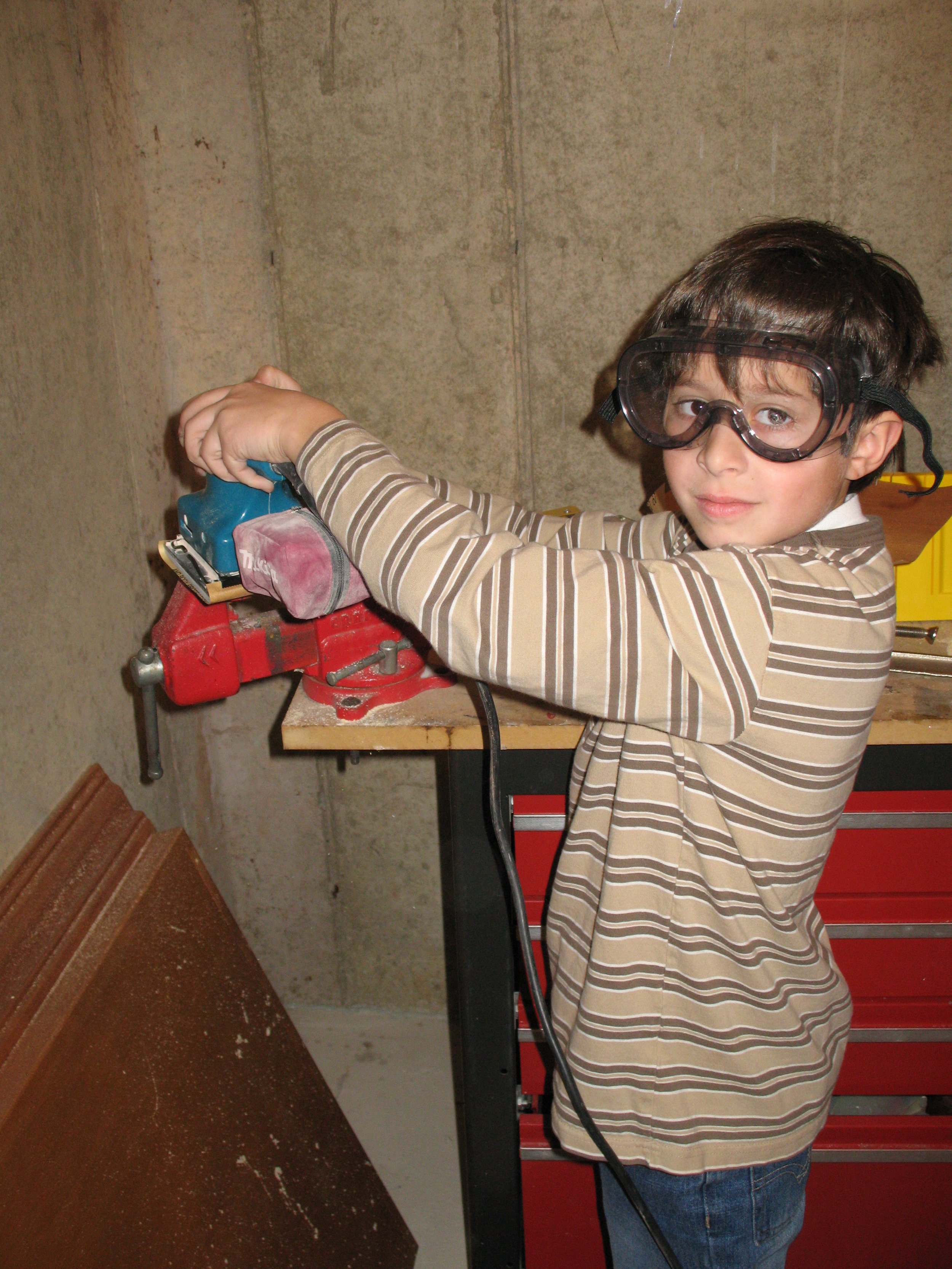
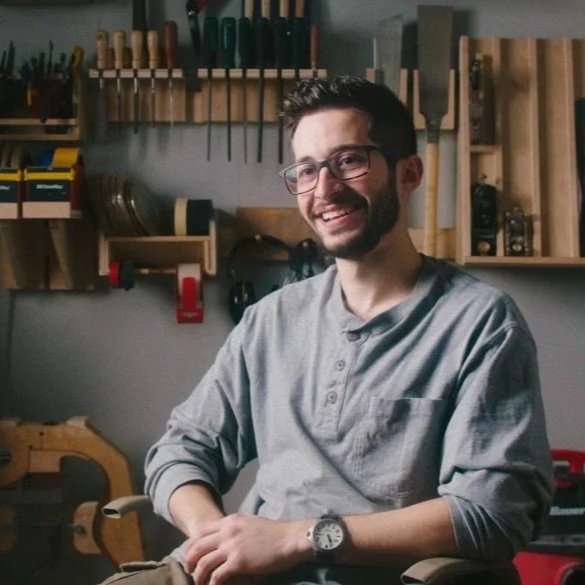
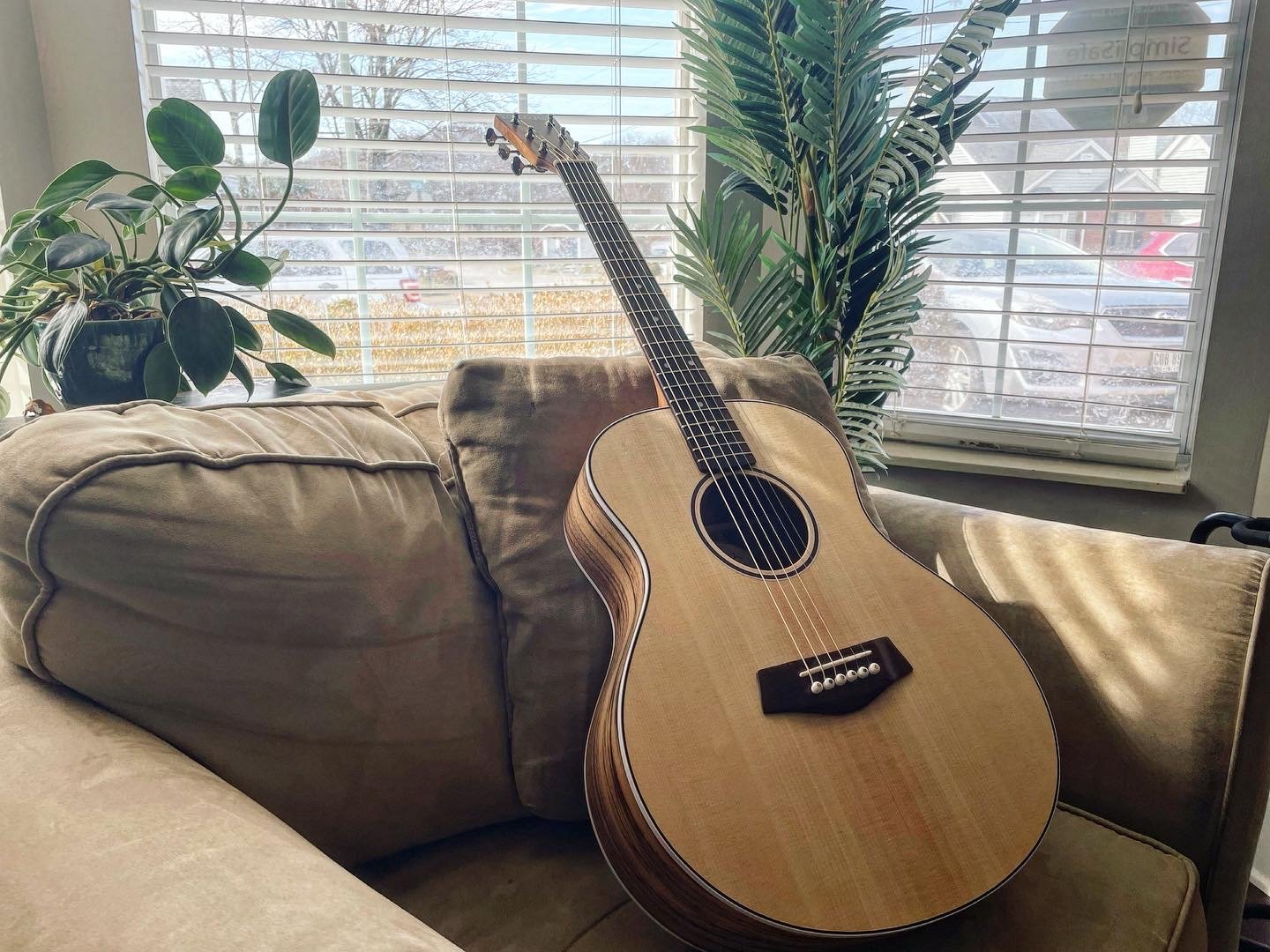

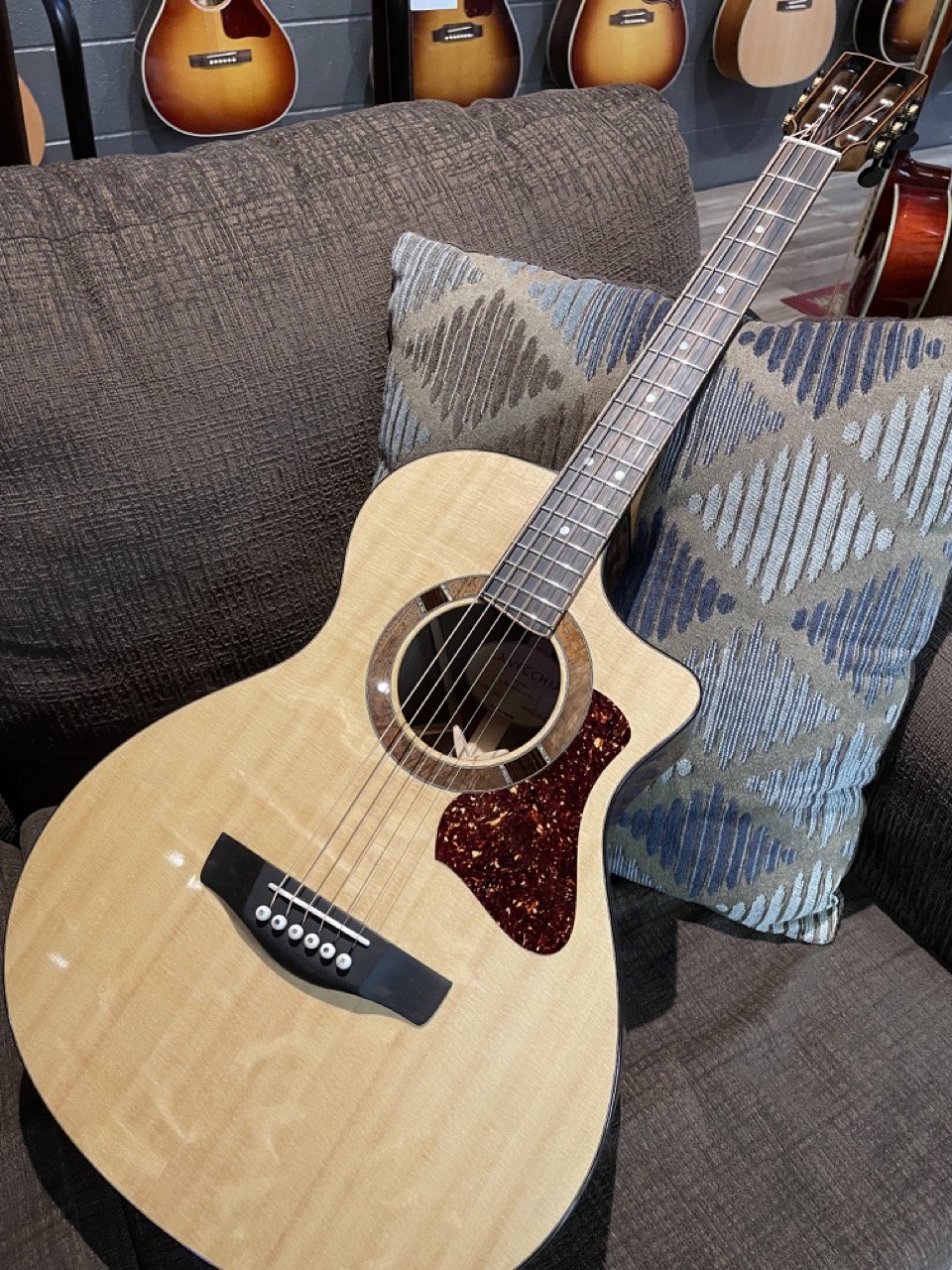
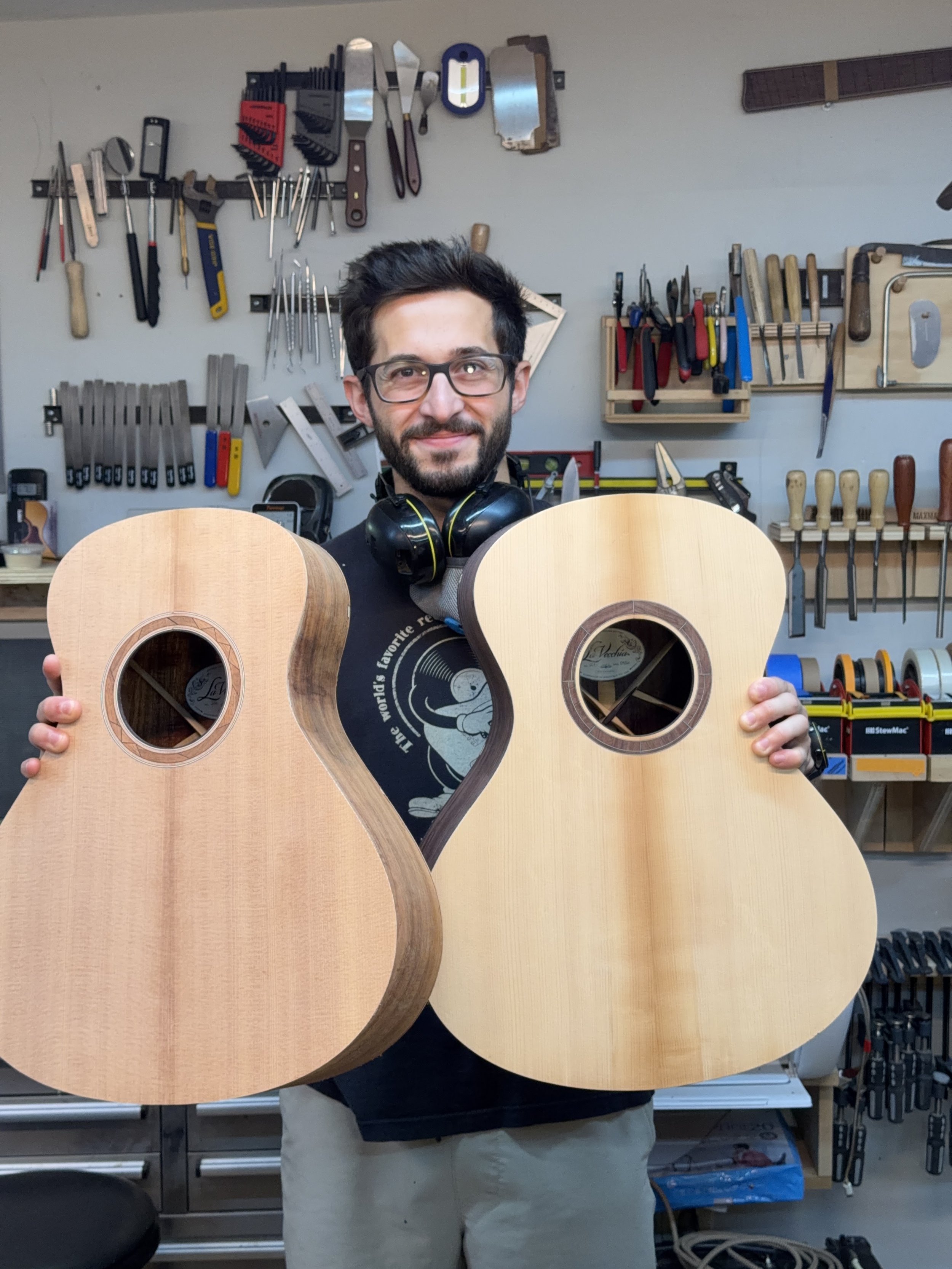
It’s crazy to think about now, but when I was younger, I had no idea that one person could make a living building guitars. I’ve always built things—Legos, models, tree forts, bike ramps, bows and arrows—contraptions that both excited and mildly concerned my parents… yeah. But everything changed when I took my first woodshop class at 12. It just clicked. I was doing other students’ projects for them, and my teacher encouraged me to go deeper. I was lucky to have that head start—having a place to fail, learn, and build without limits set the foundation for everything I do now. Around that same time, I started begging my parents for a guitar.
When I finally got one, I saw it as the peak of craftsmanship—something built by white-haired masters in a faraway land where trees grew solely to become instruments. I couldn’t play it to save my life, but I was completely captivated. Soon, my whole identity revolved around two things: woodworking and guitars.
The First Builds
In high school, I started building electrics—a Tele, who doesn't love a tele? A Strat for my dad, a few of my own designs, and others. But every guitar I built came with a healthy dose of failure. My early guitars had their flaws—imperfect neck angles, finishes that didn’t quite land, action that needed work. They were playable, and I was proud to complete them, but I knew they weren’t yet the instruments I wanted to create. Each build taught me something new, revealing just how much I still had to learn. But I kept going, and dreamt of starting a company one day.
Eventually, I attempted my first acoustic, resurrecting a pawn shop wreck. The sides were mostly intact, so I salvaged them and built my first acoustic from the ruins. It looked… okay. But it didn’t play well, and it certainly didn’t sound great. I was no luthier, but I was hooked.
The Long Road to Luthiery
In college, I moved to Nashville, kept building when I could, and did repairs for friends. I thought my only path was working at Gibson or becoming a touring tech. But after bringing a couple of my guitars to town, my friends were impressed. An old idea, a dream I had almost forgotten, started to resurface: could I actually do this??
At the time, I was studying audio engineering and studio art, still unsure of my path. I took on odd projects—building a 3D printer, robot arms, model airplanes—realizing I had skills that others didn’t. I started doing repairs more seriously, then landed a job at a small recording studio design company called Music City Acoustics. There, I learned about small business ownership, product design, manufacturing, Acoustical physics and working with other people to create things.
Then I found Make Nashville, a local makerspace with 24-hour access to a workshop. I spent every free moment there. It had just enough tools to build guitars again, and when I finished my first acoustic in Nashville, people loved it. That’s when I knew—I wanted to be a luthier.
The Moment Everything Changed
One day, I stumbled upon the Luthier on Luthier podcast. I had worked on guitars for nearly a decade, yet somehow, I had never really absorbed the word luthier. That moment changed everything. I began listening to Luthiers, soaking up their words and preparing for the inevitable.
And then, something even bigger happened.
I was at the makerspace, setting the neck on my second scratch-built acoustic, when another member walked up. He had been watching my progress and asked, "Would you build me one? I'll pay you. Whatever it costs."
I was stunned. My heart was pounding. I checked out my online shopping cart before the conversation even ended.
A week later, my lifelong friend—the guy who had shaped my love for guitar more than anyone—reached out. He wanted one, too. "Do your thing with it," he said. Another paid commission. That one really got me. Writing about it now still brings tears to my eyes.
Then, maybe two weeks later, I was at Woodcraft, digging through exotic lumber to find the perfect piece of binding wood. A store worker asked what I was building. I showed him some photos. He was a player—a good one. He wanted to see the guitars in person. He came to the shop. Then he commissioned one, too.
In less than a month, I went from wondering if I could ever make a career out of this to suddenly having three paid commissions. It was unreal.
Going Full-Time
I was working all day at MCA and then building all night. Eventually, I burned out. I couldn’t give my all to both, so I quit my job to focus on guitar building and repairs full-time. It was terrifying, but I knew it was the right call.
At first, my “shop” was my bedroom. Yes, my bedroom. I woke up next to a drill press. Not exactly ideal, But it worked for me at first. After a few months, It got ridiculous so I started looking for a real space. After weeks of searching, I realized there was an unused attic room at Make Nashville. Low ceilings, OSB floors, sketchy staircase—but it was a space. After some convincing, Actually a lot of convincing, I rented it.
The day I moved in, I stayed until 1 a.m., sharpening tools, just soaking it in. That was December 2023.
Where I Am Now
Since then, I’ve built 22 guitars, refined my repair skills, attended my first guitar shows, and designed my TripleNaught acoustic model—my purest expression of what I want to create right now. I’ve taken my guitars to Carter’s, Gruhn’s, and Joe Glaser’s shop for feedback. To my surprise, they were not only accepted but encouraged.
Without an apprenticeship or formal training, I felt like an imposter calling myself a luthier. But after enough guitars, enough feedback, and enough hours spent at the bench, I know—I am a luthier. I’m no master, not yet. But I’m doing good work, and I’m growing every day.
Today, I still work out of the attic at Make Nashville—a place I lovingly call the Freakshow Country Club because of the wild mix of artists, engineers, and makers it attracts. It’s inspiring. I hope to stay as long as I can.
If you’d like to follow along, there should be a QR code somewhere nearby. That’ll take you to my Instagram, Facebook, website, and YouTube. I’m most active on Instagram—come say hi, let me know how you found me. And if you’re still reading this, bravo—you’ve got some serious commitment.
Maybe that commitment has earned you some money in life. Consider putting it toward an instrument built by someone who pours everything into his craft. I’d love to build one for you.
Thank you. Seriously.
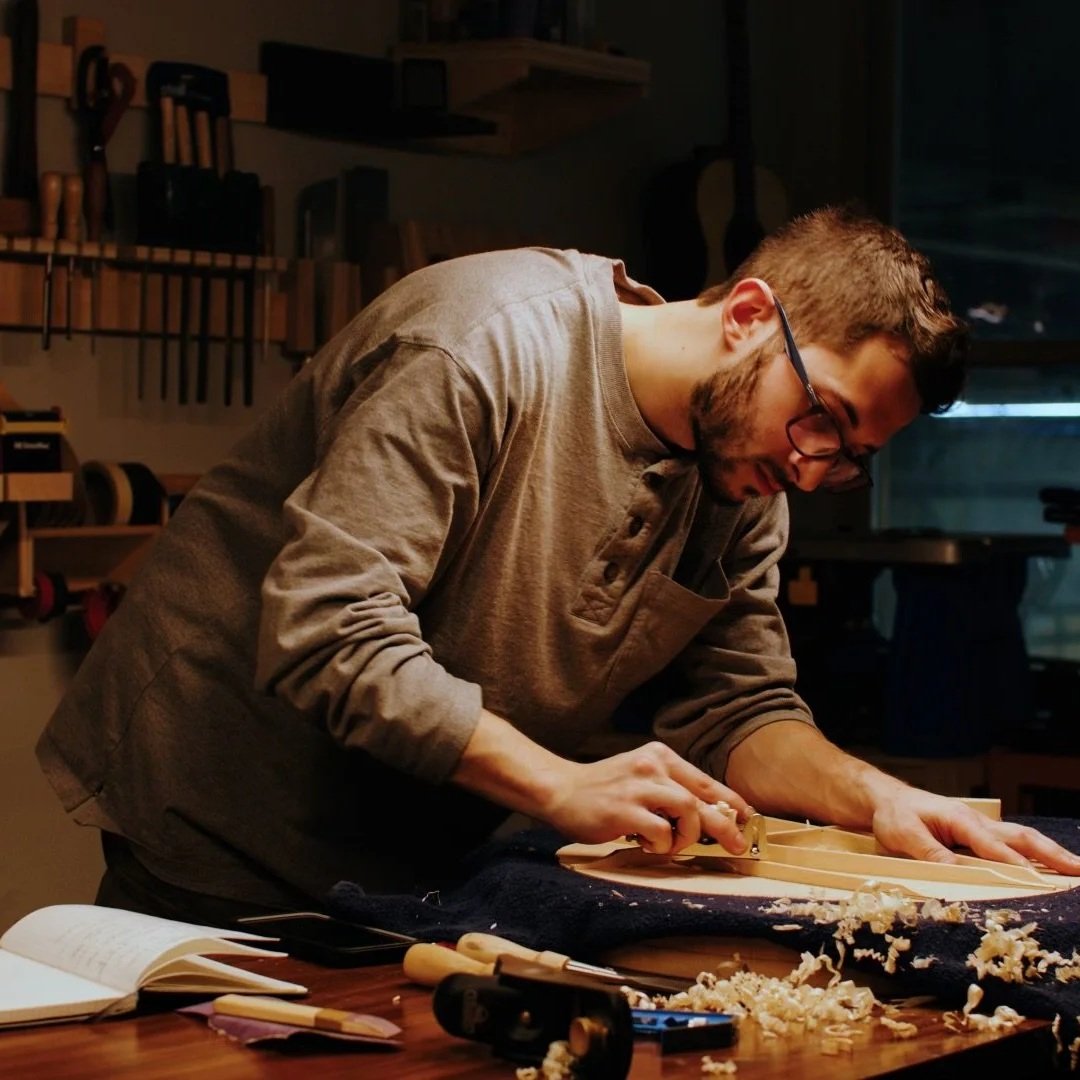
What would they do?
Many builders today are going to great lengths to preserve and replicate traditional steel-string acoustic guitars. These efforts have provided so much great insight, and the people who have committed their lives in this way are national treasures. But for me personally, I'm captured by the effort to push the guitar forward, leaning on the lessons of the past but reaching for the guitar of the future.
As a repair person in Nashville, TN, I occasionally get the opportunity to work on some very special vintage instruments. In those moments I try to learn what I can, but mostly, I think of the people who originally built and designed them.
My thought is this: if they had the technology, the data, and wealth of information we have today, they would use it. The musical context of the guitar has changed wildly over time. It has proven to be one of the most versatile and adaptable instruments in western music. In light of that, guitars contend with a new set of problems in the modern day. The context of the guitar has changed, and todays creation technology and access to information has reshaped the possibility curve for makers. If we could reach back into the late 1930s and pull a golden era master luthier into the modern day, I believe they would see room for improvement.
Details Matter
If you are going to do all that, why not take it a step further?
Honestly, it does not matter how you do it—building a guitar is a lot of work. As a one-man shop, it seems to me that any detail that feels like a push in a positive direction is worth doing, no matter how much extra work it takes. I'm already going to unreasonable lengths just to construct the guitar; why stop short of giving it everything I've got?
After all, that is what feels good.
I think this way of thinking is much bigger than guitars. From my perspective, this is a pure expression of the human spirit. I see instrument makers as artists. I also see a 6-cylinder engine as art, so maybe my definition is a bit loose. However, I think we can all appreciate that the creation of musical instruments is an expression of raw human spirit.
I digress. The point is this: it feels good to step away from a project knowing I gave it everything I had. Strangely, that good feeling never seems to go away either. It may be silly, but I think the effort, time, and love work their way into the wood. Some guitars are haunted.
They could be haunted by the people who built them or the people who played them, but there's something left behind after lots and lots of raw effort that stays with the guitar forever.
Details make the difference. Always have and always will.
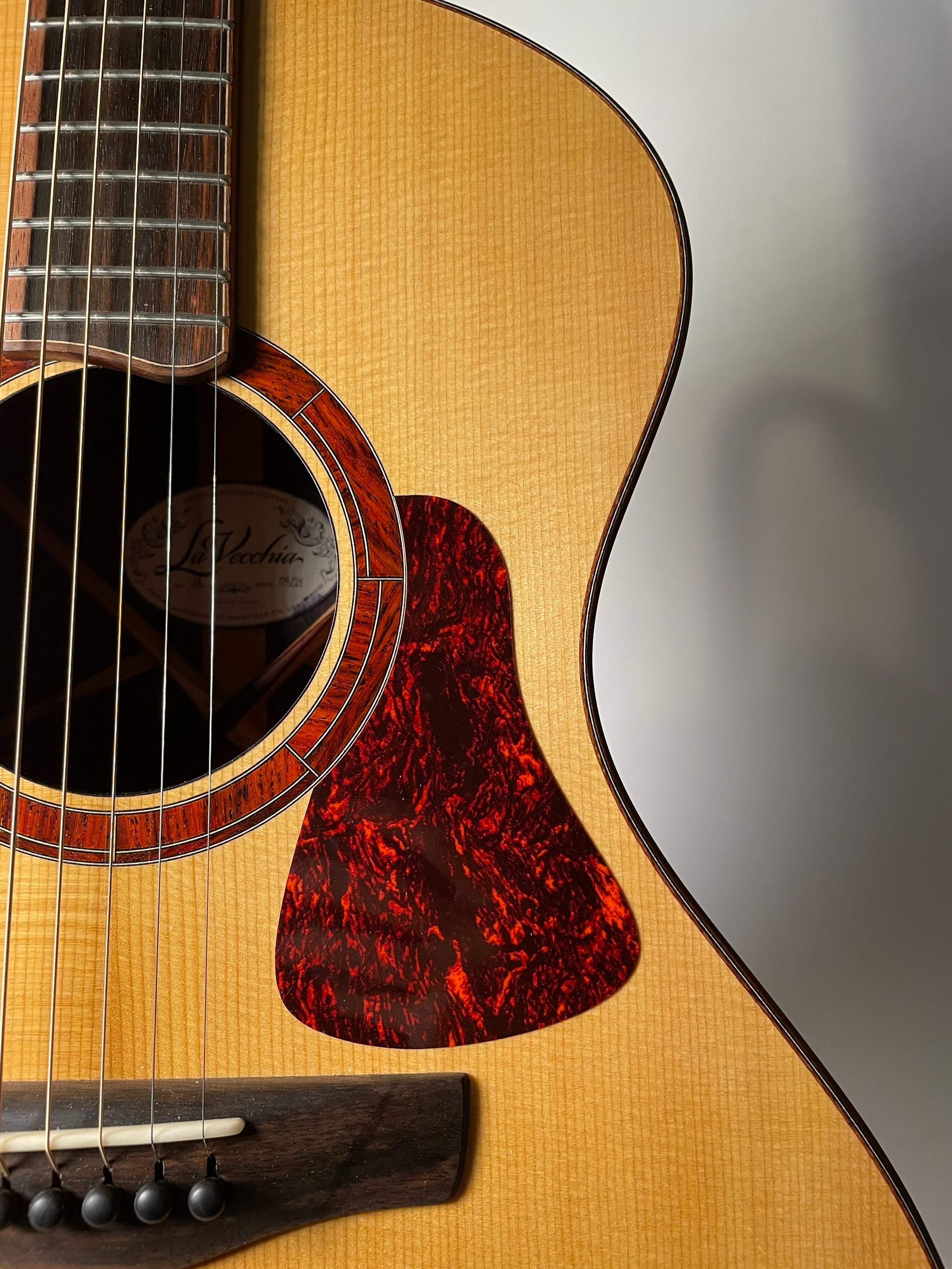
I don't hold back on the details. That does not mean I'm interested in covering the guitar in pearl or an exotic hardwood inlay of your dog. However, aesthetic detailing can provide a great deal of inspiration. Nature helps us with that by providing some pretty remarkable building materials, and generally I just try to emphasize that.
Instead, I mean that I consider every aspect of the build in great detail. It just feels good to do so, and that's the only reason I need. I enjoy the minutiae of guitar tone and the physics of sound. What glue will I use for this joint and why? How can I reduce the weight of this part? Where does the dominant mode of this top fall in relation to the musical scale? Could this be stiffer? Should it be? And my personal favorite: "What happens when I do this?"
I can't leave out the significance of a detail falling short. That just sucks. Personally, I find it hard to look at anything the same way after I've discovered a detail that bugs me. With a guitar, it does not take much. Sharp fret ends, for example—that's a total bust. In fact, the setup is probably the single most important set of details to do with the whole instrument.
If the guitar is stunning but plays like a dog, well, it's a beautiful piece of woodworking, but not a complete instrument. When I go to bed at night, I sometimes lie awake thinking about fret buzz, and that's the way I think it ought to be. Details make the difference, and I learn a ton from my clients on that part as well. A great player's hands can measure detail like an electron microscope. I know that and respect it.
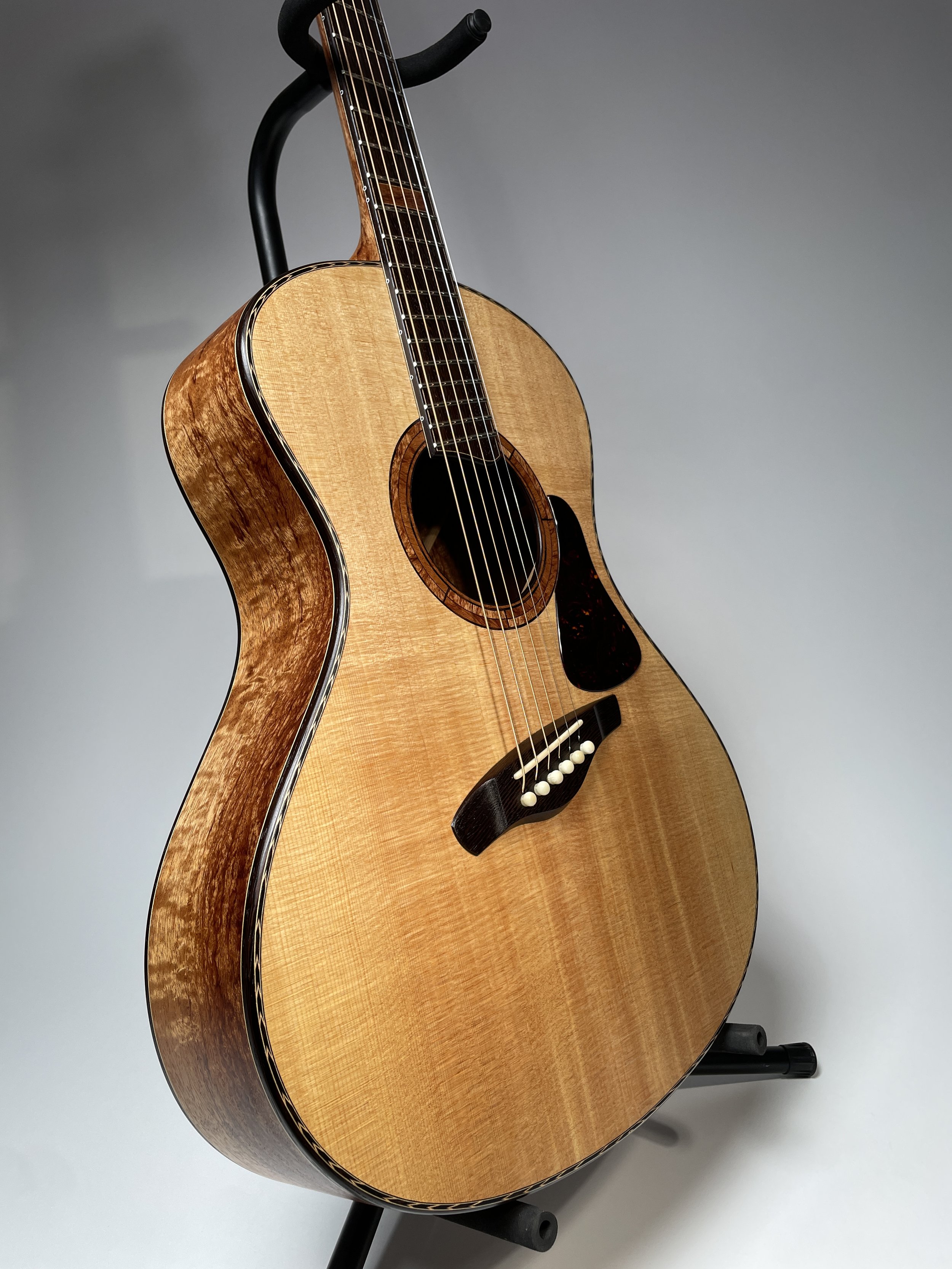
I do this for me
My focus is on building the best instrument I am capable of. This is as much a pursuit of personal development as it is an effort to create a great product. It may be unhealthy, but my identity is all mixed up in what I do for a living.
I simply want to live a life that feels good.
Nothing helps me with that more, than total commitment to crafting these instruments at the highest level I can, and connecting with the musicians, enthusiasts, and builders who share my appreciation for the guitar.
Guitar Repair is guitar research
Some of the most formative learning experiences that now inform my guitar building were learned during a repair. Taking the opportunity to rescue an instrument from the dead can really shed some light on the things that count in the long run. Make a habit of taking on that kind of project like I have and, you might start to notice some patterns.
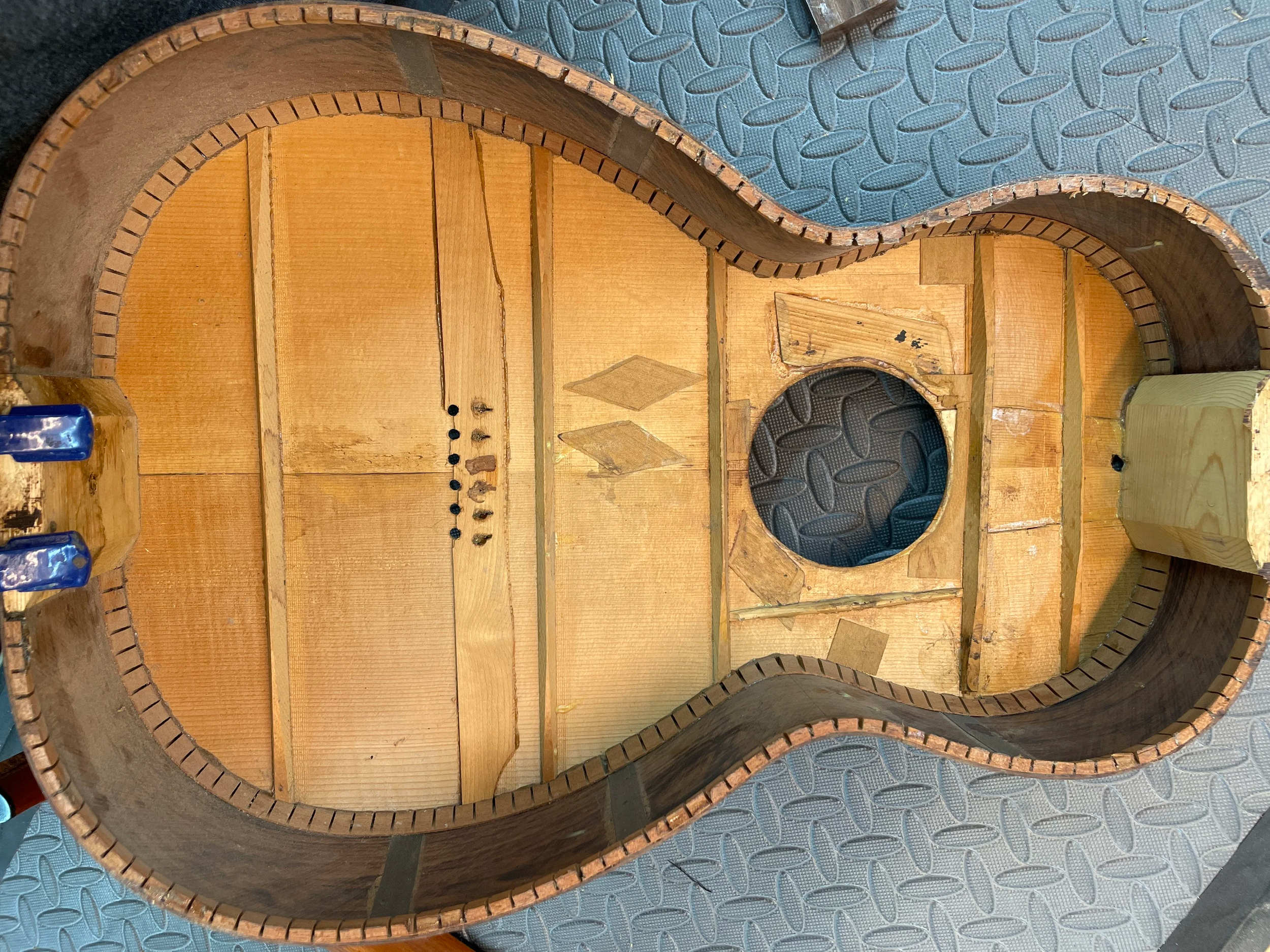
It’s going to get worse before it gets better.
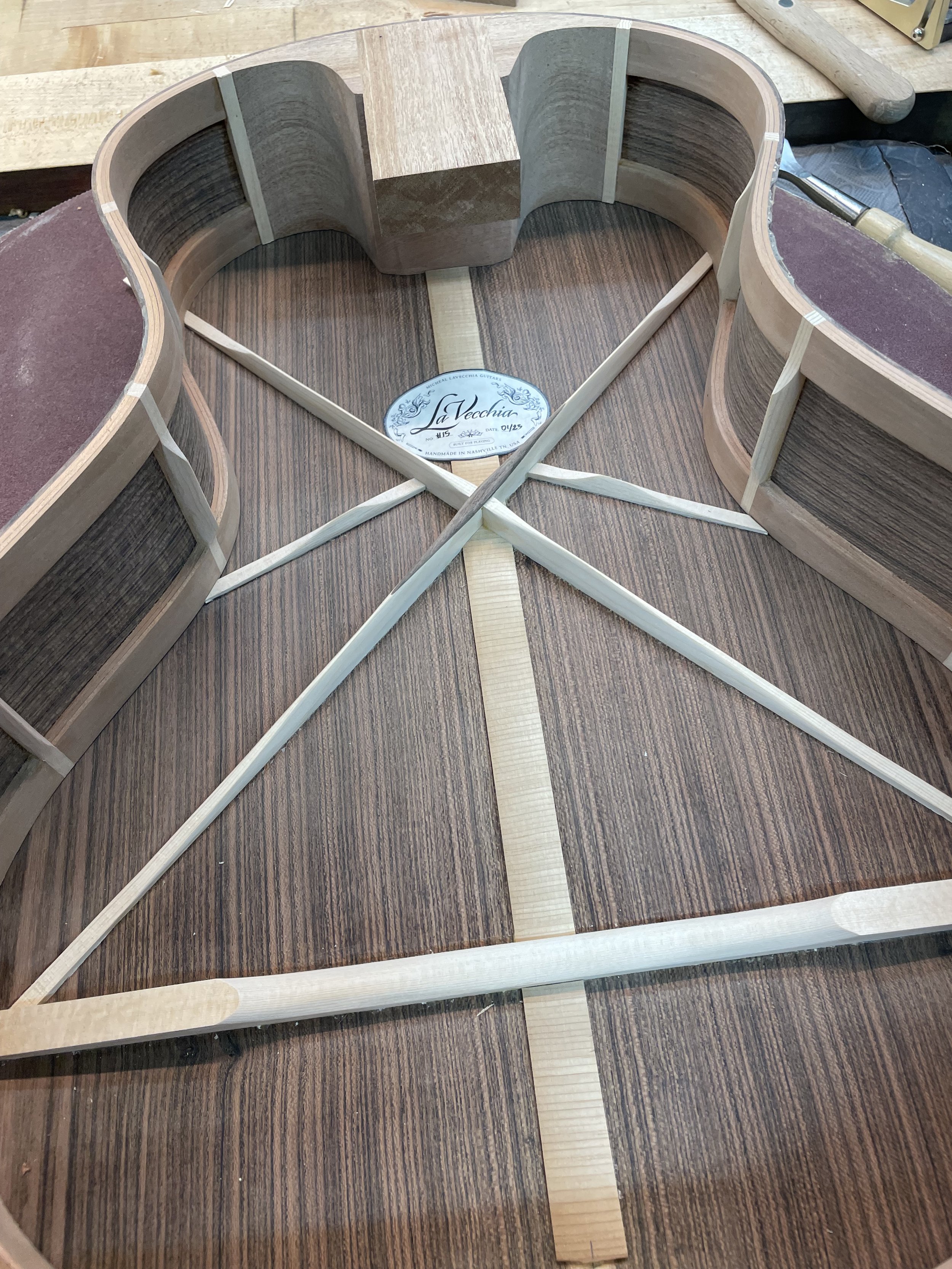
The last time someone saw this Bay State Parlor acoustic from this perspective would have been right before they closed the box at the factory in 1896.

Thoughts and stories
-
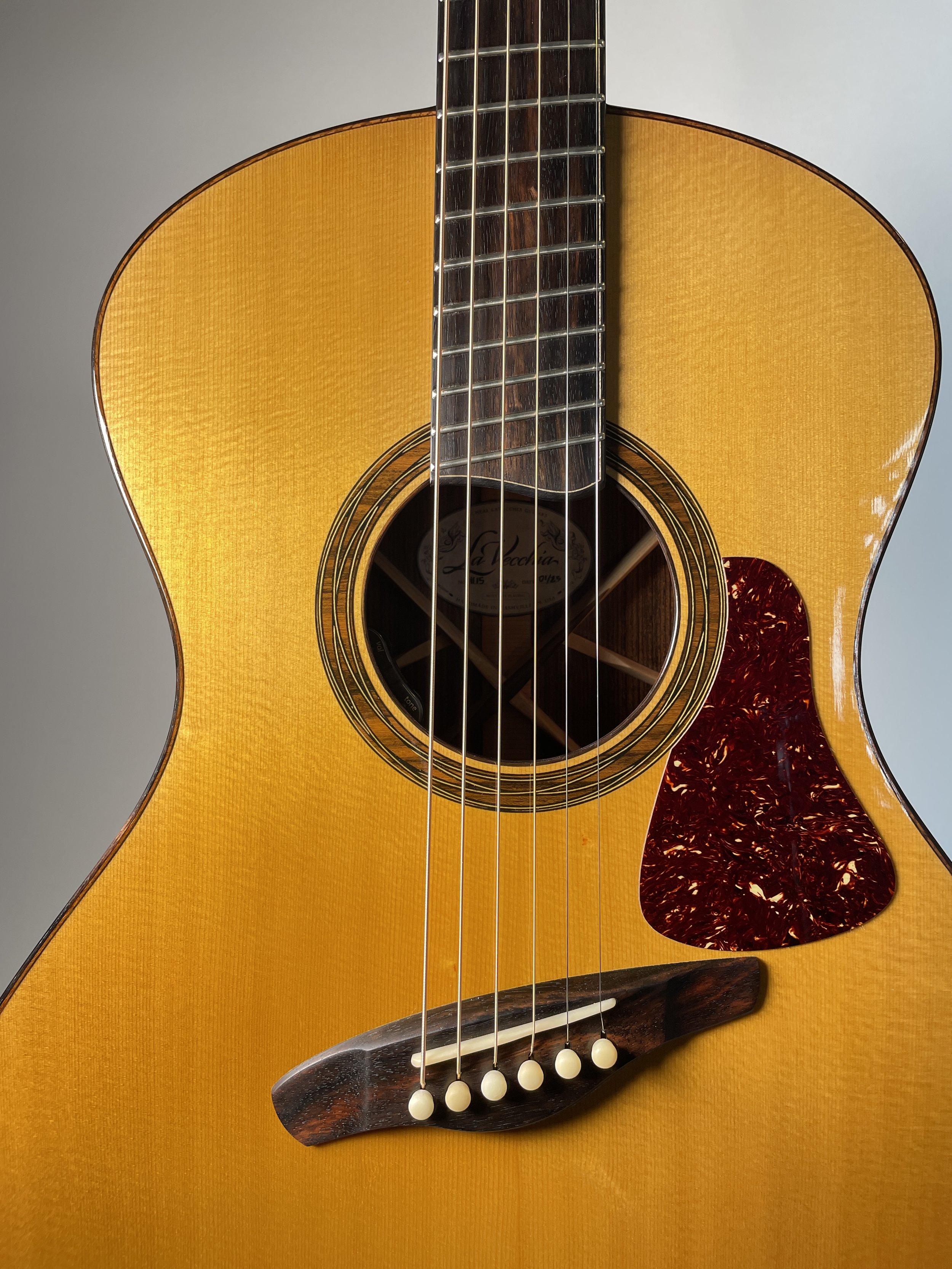
Why I Build Guitars
A short story about the moment my love and endless wonder for the guitar began.
-
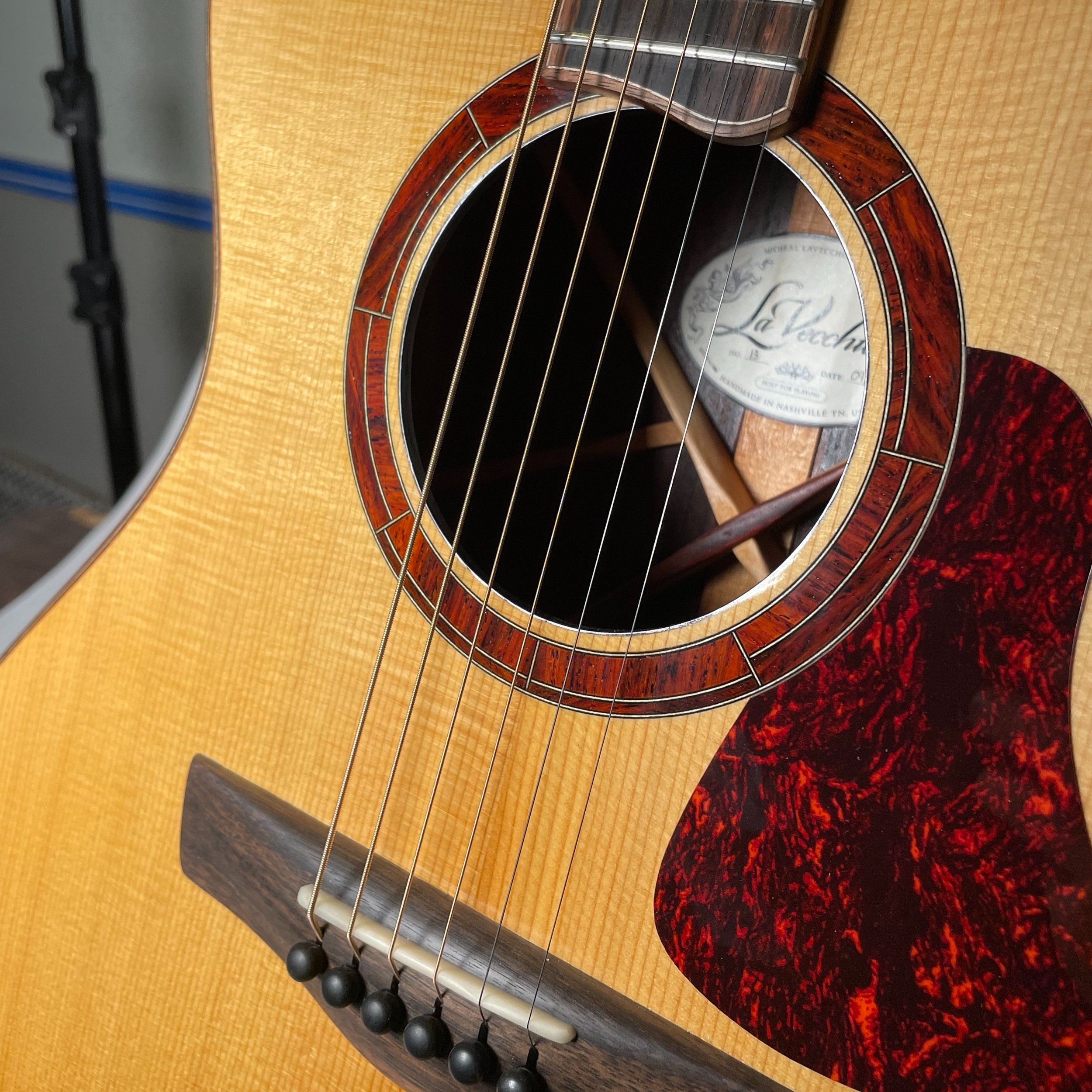
Building Guitars With Soul
I don’t build perfect guitars, I build guitars with soul. Ever single one demands my attention, heart and full effort. No Two are the same, and when you pick it up, you can feel the love that goes into them, Read about my philosophy more by clicking the button below.
-
Repair work and Its Influence on Building
In addition to my builds, I run a full service repair shop in Nashville TN. I use the lessons learned in each repair to inform my designs. You can read more about how repair influences my builds by clicking the button below.